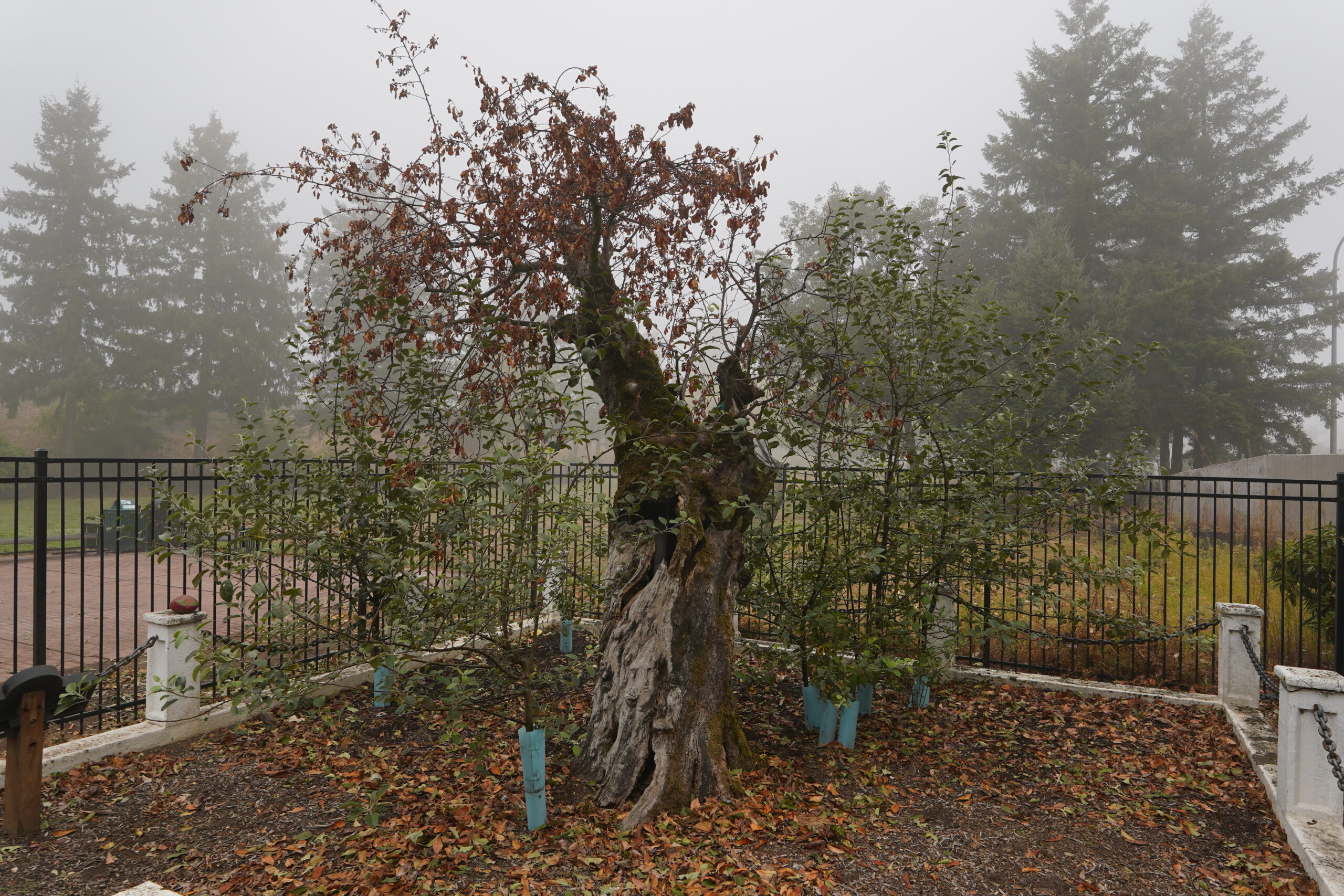
Old Apple Tree Park centers on a tree that many locals connect with the Hudson’s Bay Company era at Fort Vancouver. The story says it grew from an apple planted around 1826, which would make it one of the oldest known apple trees in Washington. Confirm details with local historians, since local stories and written records can differ.
Where Did the Tree Come From?
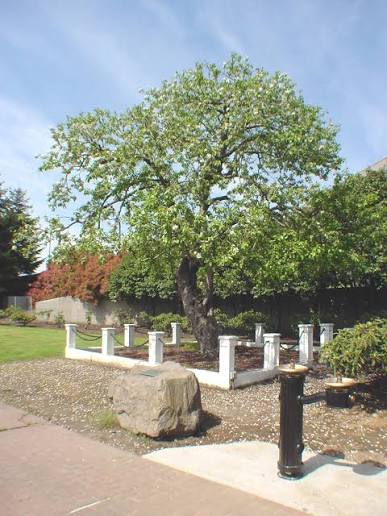 The most common account says the tree grew from seeds planted during the Hudson’s Bay Company period at Fort Vancouver, around 1826. Hudson’s Bay Company workers grew gardens and orchards to supply the post. Early fruit trees in the region often grew from seeds or cuttings carried over long distances.
Local stories are not always consistent about dates or who planted the tree. Some accounts tie it to specific people, while others describe a more general origin. Treat the 1826 date as a traditional story, and confirm details with the Fort Vancouver National Historic Site or local archives.
What Makes the Tree Special Today?
The tree is valued as a living link to the early fur trade era and to the region’s agricultural beginnings. Its age, if the traditional date holds, would place it among the oldest fruit trees in the state. Visitors often find its gnarled trunk and spreading limbs a striking contrast with modern orchards.
Over the years, supports and careful pruning have helped the tree stay standing. Its survival depends on continued care, so please don’t climb it or break branches. Many people see the tree as a symbol of the city’s roots.
How Do You Visit the Park?
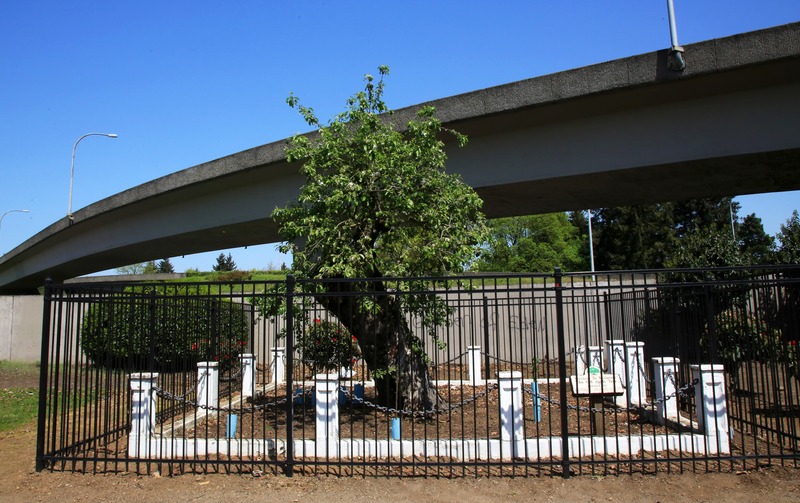 Old Apple Tree Park is a small, open green space, so a visit can be brief or leisurely. A short stop or a relaxed hour both work, depending on your interest in the history. Check the city’s parks information for current hours and seasonal closures.
The park is best approached on foot or by bike, since parking near small parks may be limited. Look for benches, paths, and any signs that explain the tree’s story. Keep dogs leashed and respect the tree’s roots by staying on marked areas.
Is the Park Accessible for Everyone?
Small urban parks are often easier to navigate than large trails, but accessibility depends on surface conditions and entry points. Check whether paths are paved and whether curb ramps connect to the sidewalks you’ll use. Staff at the city can answer specific questions before you go.
Bring a seat if you need one, since benches may not be placed where you need them. If you use a mobility device, map your route before you leave home. Bring water and a hat, since open spaces can be sunny.
What Else Is Nearby for History Lovers?
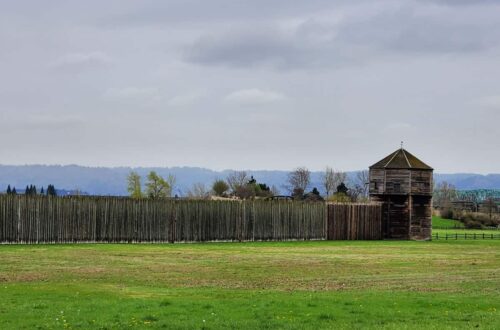
Fort Vancouver National Historic Site is the most natural companion for this park, since it covers the Hudson’s Bay Company trading post. Clark County Historical Museum adds regional context. Combine a short walk with a longer visit to a historic site to get the full picture.
The park works well as a short stop within a larger day of exploring the city’s historic sites. Ask locals or visitor information staff for a current map of nearby places.
How Can You Make the Visit Meaningful?
Read the history before you go, then compare the traditional story with what you see on site. Bring a camera for seasonal changes, since blossoms and leaves transform the tree through the year. Visiting in spring, when apple trees typically bloom, can be memorable. Share your own questions with local historians.
Consider your visit as part of a broader story. The tree connects today’s city to a time before the town existed. Pause for a few minutes and imagine the gardens, workers, and seasons that shaped it. Take a photo, then put the phone away for a minute.
Frequently Asked Questions
Is the tree really from 1826?
The 1826 date is a traditional account rather than a documented fact in every source. Local historians and park records may describe the tree’s origins differently, so check current information before repeating the date. A respectful way to share the story is to say it’s said to date from about 1826.
Can visitors pick apples from the tree?
Please don’t pick fruit or break branches. The tree is a living historic resource, and damage can harm its health. If you want to taste apples, visit a local orchard or farmers market. Local growers can explain which varieties grow best in the region.
How long should I plan for a visit?
A quick stop takes under an hour, while a relaxed visit with reading and photos may take longer. Pair the park with another attraction to make the trip worthwhile. Check the city’s current hours and any seasonal notices before you leave, since small parks can close for maintenance.